
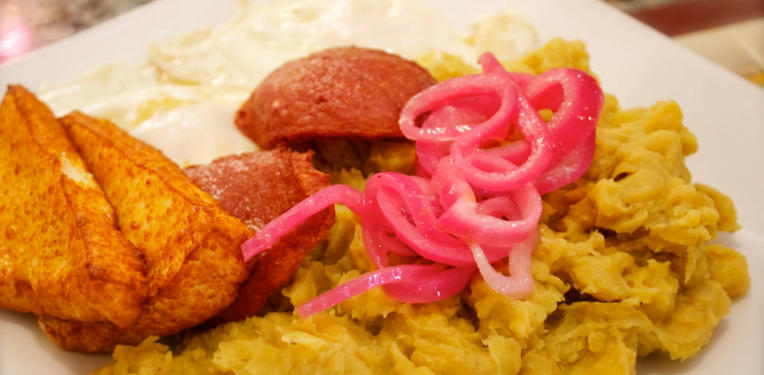
Dominican mangu is more than just a dish; it’s a beloved staple that carries rich cultural significance in the Dominican Republic. Understanding its origins not only enhances our appreciation for this comfort food but also allows us to connect more deeply with the country’s history and traditions.
A Historical Perspective
Mangu, a traditional Dominican breakfast dish primarily made from green plantains, has roots that reach deep into the island’s history. Originally brought to the Caribbean by the Spanish colonizers in the 16th century, plantains quickly became a dietary staple for both indigenous populations and African slaves. This fusion of cultures is reflected in mangu’s evolution, as it combines indigenous and African cooking practices to create a meal that embodies the Dominican identity. The dish’s simplicity and nourishing qualities made it a favorite among poorer communities, ensuring its place in Dominican cuisine.
The Ingredients and Preparation
At its core, mangu is made from boiled green plantains, which are then mashed and seasoned to perfection. The preparation is straightforward: the plantains are boiled, peeled, and mashed, often mixed with butter and salt to achieve a creamy consistency. Some families add vinegar or onion for an extra kick. Served alongside fried eggs, cheese, or salami, mangu becomes a hearty breakfast that fuels the day ahead. The dish is a testament to the Dominican way of life, emphasizing the importance of using simple, locally sourced ingredients to create delicious meals.
Cultural Significance and Modern Variations
Beyond its nutritional value, mangu plays a significant role in Dominican culture. It is commonly featured on breakfast tables and is a popular dish at gatherings, symbolizing hospitality and warmth. Over the years, various regional variations have emerged, showcasing local twists such as adding avocado or beans. Restaurants across the globe now celebrate mangu, bringing a taste of the Dominican Republic to various culinary scenes. This globalization of the dish highlights its universal appeal and the continued evolution of Dominican cuisine, as it adapts to new tastes and preferences while remaining true to its roots.
In conclusion, mangu is a dish steeped in history and culture that captures the essence of the Dominican Republic. Whether you’re enjoying it for breakfast or sharing it with friends, this simple yet flavorful dish offers a delicious way to connect with Dominican heritage. To discover more about this comfort food, consider trying your hand at making mangu or exploring other traditional Dominican recipes. It’s a delightful journey worth taking!