
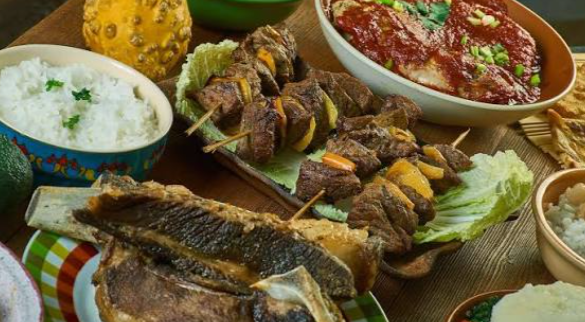
Exploring African cuisine is a journey that tantalizes the taste buds and broadens culinary horizons. Each region boasts unique flavours, traditional dishes, and techniques that reflect the continent’s rich culture and history.
1. Discover Traditional Dishes from the North
Northern Africa is a melting pot of cultures, heavily influenced by Arab, Berber, and Mediterranean traditions. This region offers a myriad of dishes, with couscous being a standout staple. Often served with vegetables, meat, or fish, couscous is both nutritious and versatile, making it a perfect introduction to North African fare.
Another iconic dish is tagine, a slow-cooked stew named after the earthenware pot in which it is prepared. Variants include lamb with apricots or chicken with olives and preserved lemons. These dishes are best accompanied by mint tea, a beloved tradition in many households.
-
- Try local street food for an authentic experience.
-
- Visit a local market to observe food preparation practices.
-
- Ask locals for their favorite dishes and hidden gems.
-
- Take a cooking class to learn how to make traditional recipes.
2. Indulge in the Flavors of West Africa
West African cuisine is known for its bold, spicy flavors and hearty ingredients. Jollof rice is a famous dish that often takes center stage at gatherings. Made with tomatoes, onions, and various spices, this one-pot dish can be complemented with grilled chicken or fried plantains.
Another must-try is egusi soup, thickened with ground melon seeds and often containing leafy vegetables and meat. Served with fufu, a starchy side made from cassava, yam, or plantain, it’s a filling meal that introduces you to African communal dining customs.
-
- Participate in communal meals to experience the culture.
-
- Try different varieties of jollof rice from various countries to taste the regional differences.
-
- Visit local eateries for authentic culinary experiences.
-
- Be adventurous—sample dishes with intense spices.
3. Savor the Delights of Southern Africa
Southern Africa’s culinary landscape is diverse, featuring dishes that reflect the region’s various cultural influences, including indigenous tribes and European settlers. Bobotie, a famous South African dish, combines spiced minced meat with a savory custard topping, showcasing a fusion of flavors that delight the palate.
Braai, or barbecue, is a social event in South Africa where meats are cooked over an open flame. It is more than just a meal; it’s a communal experience that brings friends and family together. Pair your meat with sides like pap (a traditional maize porridge) and chakalaka (a spicy vegetable relish) for the complete experience.
-
- Join a braai for a true taste of South African culture.
-
- Explore local wines; the region is famous for its vineyards.
-
- Attend food festivals to discover a variety of local dishes.
-
- Be open to trying game meats, which are often featured in traditional dishes.
4. Explore East African Culinary Treats
East Africa is home to an exquisite variety of flavors and ingredients. A quintessential dish is ugali, a stiff porridge made from maize flour. This staple food is typically enjoyed with various meat or vegetable stews, showcasing the region’s fresh produce and culinary traditions.
Samosas are also popular, especially in countries like Kenya and Tanzania. These savory pastries are filled with a mixture of spiced meat, potatoes, or vegetables and are perfect for snacking. Enjoy them with a cup of chai and relevant local sauces for a delightful treat.
-
- Visit local eateries where you can sample ugali with different accompaniments.
-
- Try street food vendors for fresh samosas.
-
- Engage with locals to learn about lesser-known regional recipes.
-
- Don’t miss out on coastal dishes that include fresh seafood and coconut milk.
5. Embrace the Vegetarian and Vegan Offerings
African cuisine offers an abundance of vegetarian and vegan options, making it accessible for all dietary preferences. Many traditional meals are centered around grains, legumes, and vegetables, ensuring a rich diversity of flavors. Dishes like injera, a fermented flatbread from Ethiopia, are served with a variety of stews and vegetables, making eating out enjoyable for plant-based travelers.
In India-influenced regions, dishes such as lentil curry or vegetable biryani can easily be found. Local markets often showcase fresh produce that can inspire meals, and trying regional fruits that are not commonly available elsewhere can be a refreshing experience.
-
- Explore regional markets for fresh vegetables and fruits.
-
- Seek out vegetarian restaurants and local eateries.
-
- Try plant-based dishes that celebrate African ingredients.
-
- Ask about options when dining out to discover local vegetarian specialties.
Embarking on a culinary journey through Africa offers both adventure and insight into the continent’s diverse cultures. From trying street food to joining communal meals, each dish tells a story that you won’t want to miss. Start planning your food travel adventure today, and let your taste buds explore the rich varieties of African cuisine!