
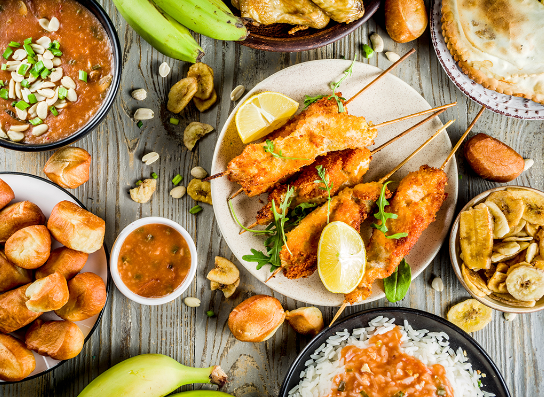
West African food culture is a vibrant tapestry of flavors, ingredients, and traditions that reflect the diverse histories of the region’s peoples. Known for its rich culinary heritage, West Africa offers an array of dishes that are as varied as its landscapes and cultures.
1. Key Ingredients of West African Cuisine
The foundation of West African cuisine consists of staple ingredients that vary by region but commonly include rice, millet, sorghum, and cassava. These grains serve as the basis for many dishes and are often accompanied by a variety of vegetables, legumes, and proteins such as meat, fish, and poultry. For instance, jollof rice, a beloved one-pot dish, uses rice as its base and is cooked with tomatoes, onions, and a myriad of spices.
Vegetables and spices are equally important, with ingredients like okra, scotch bonnet peppers, and palm oil giving dishes their unique flavor profiles. Examples of popular dishes include egusi soup made with ground melon seeds and fufu, a starchy side often enjoyed with soups and stews.
-
- Familiarize yourself with common ingredients.
-
- Experiment with spices to enhance your dishes.
-
- Incorporate seasonal vegetables for freshness.
-
- Explore local markets for authentic flavors.
2. Culinary Techniques and Preparation
Cooking techniques in West Africa are as diverse as the cultures themselves. Traditional methods include steaming, boiling, frying, and grilling. For instance, the process of making fufu involves boiling starchy ingredients and then pounding them until they become a smooth, stretchy consistency. This method not only contributes to the texture but also enhances the dish’s flavor.
Moreover, many West African dishes are cooked using communal methods, emphasizing the social aspect of food preparation. Groups often gather to cook together, making the meal preparation a shared experience that strengthens community bonds. Dishes are typically served in large portions, encouraging family-style dining.
-
- Learn traditional cooking methods to appreciate authenticity.
-
- Try communal cooking for a social experience.
-
- Use proper techniques for preparing starchy sides.
-
- Invest time in seasoning for deeper flavor.
3. Cultural Significance of Food in West Africa
Food in West Africa is more than just sustenance; it holds deep cultural significance and often plays a central role in celebrations, traditions, and rituals. For example, food is a cornerstone of important ceremonies such as weddings and naming rites, where specific dishes may be prepared to honor cultural heritage and family lineage. It is customary to offer food to guests as a sign of respect and hospitality.
The communal aspect of dining further underscores food’s role in bringing people together. Sharing meals signifies unity and fosters familial bonds, making food a pivotal element of social life. In many cultures, storytelling and sharing experiences during meals enhance the communal atmosphere, keeping traditions alive through generations.
-
- Engage in food-related traditions to understand their importance.
-
- Share meals with family and friends to strengthen ties.
-
- Participate in community celebrations that revolve around food.
-
- Learn the stories behind traditional recipes.
West African food culture is a rich and engaging realm filled with diverse flavors and traditions. By exploring its intricacies—from ingredients to cooking techniques—you can gain a deeper appreciation for this vibrant culture. So why not try cooking a West African dish today? It’s a delicious way to connect with a different part of the world and possibly spark a new passion in your kitchen!