
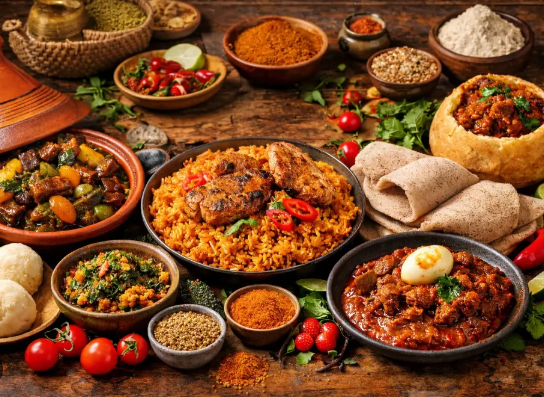
African cuisine is a vibrant tapestry woven from diverse cultures, traditions, and ingredients. Each region brings its own unique flavors, techniques, and dishes, inviting food enthusiasts to explore the rich culinary heritage of the continent.
1. Exploring Regional Flavors
Understanding the different regions of Africa is essential when diving into its cuisine. North Africa is characterized by its use of spices like cumin, coriander, and saffron, commonly found in dishes such as tagine and couscous. In contrast, West Africa embraces bold flavors, utilizing ingredients like yams, plantains, and groundnuts in stews and soups like egusi and jollof rice.
East Africa offers a blend of Indian and indigenous influences, evident in dishes like ugali and samosas, while Southern Africa showcases barbeque techniques with braai and elevated maize dishes like pap. Each region not only offers unique flavors but also diverse cooking styles that reflect their cultural stories.
-
- Research regional ingredients for an authentic experience.
-
- Try incorporating spices specific to the area you are exploring.
-
- Familiarize yourself with traditional cooking techniques.
-
- Attend local cooking workshops to learn from experts.
2. Iconic Dishes of the Continent
Some dishes exemplify the essence of African cuisine and should be on every food lover’s list. For instance, injera, a spongy flatbread made from teff flour, is a staple in Ethiopian cuisine, served with a variety of stews called wats. Another must-try dish is biltong, a form of dried cured meat popular in South Africa, made from various meats and seasoned with spices.
Then there’s the famous West African jollof rice, a beloved party dish known for its rich tomato and pepper base, garnished with vegetables and usually served with fried plantains. Each of these dishes tells a story of tradition, celebration, and community, inviting diners to experience the heart of African culture through food.
-
- Identify three iconic dishes to start your culinary journey.
-
- Make a shopping list of unique ingredients needed for these dishes.
-
- Plan a special meal night featuring these dishes.
-
- Share the experience with friends or family to create a community dining experience.
3. Cooking Techniques to Master
Mastering African cooking techniques can elevate your culinary skills and help you engage more deeply with the cuisine. One fundamental method is slow cooking, often used for braised meats and stews, allowing flavors to meld together beautifully over time. Techniques such as steaming, grilling, and frying are also essential, especially when preparing dishes like plantain chips or grilled meats, known as kebabs in various regions.
Additionally, fermentation plays a crucial role in many African dishes. The preservation of foods through fermentation, such as the preparation of base sauces or breakfast porridge, enhances taste and nutritional value. Learning these techniques can transform the way you approach cooking, making it more fun and enriching.
-
- Start by perfecting slow cooking methods for stews or braises.
-
- Experiment with smoking and grilling techniques for meats.
-
- Incorporate steaming for vegetables and grains.
-
- Try your hand at fermentation with simple recipes.
Embracing African cuisine is an exciting journey into the rich and diverse cultures of the continent. By exploring regional flavors, mastering iconic dishes, and honing essential cooking techniques, you can bring a taste of Africa into your home. So gather your ingredients, invite friends over, and enjoy the adventure of cooking like a true African culinary artisan!